Year: 2014
Medium: Mixed media sculpture
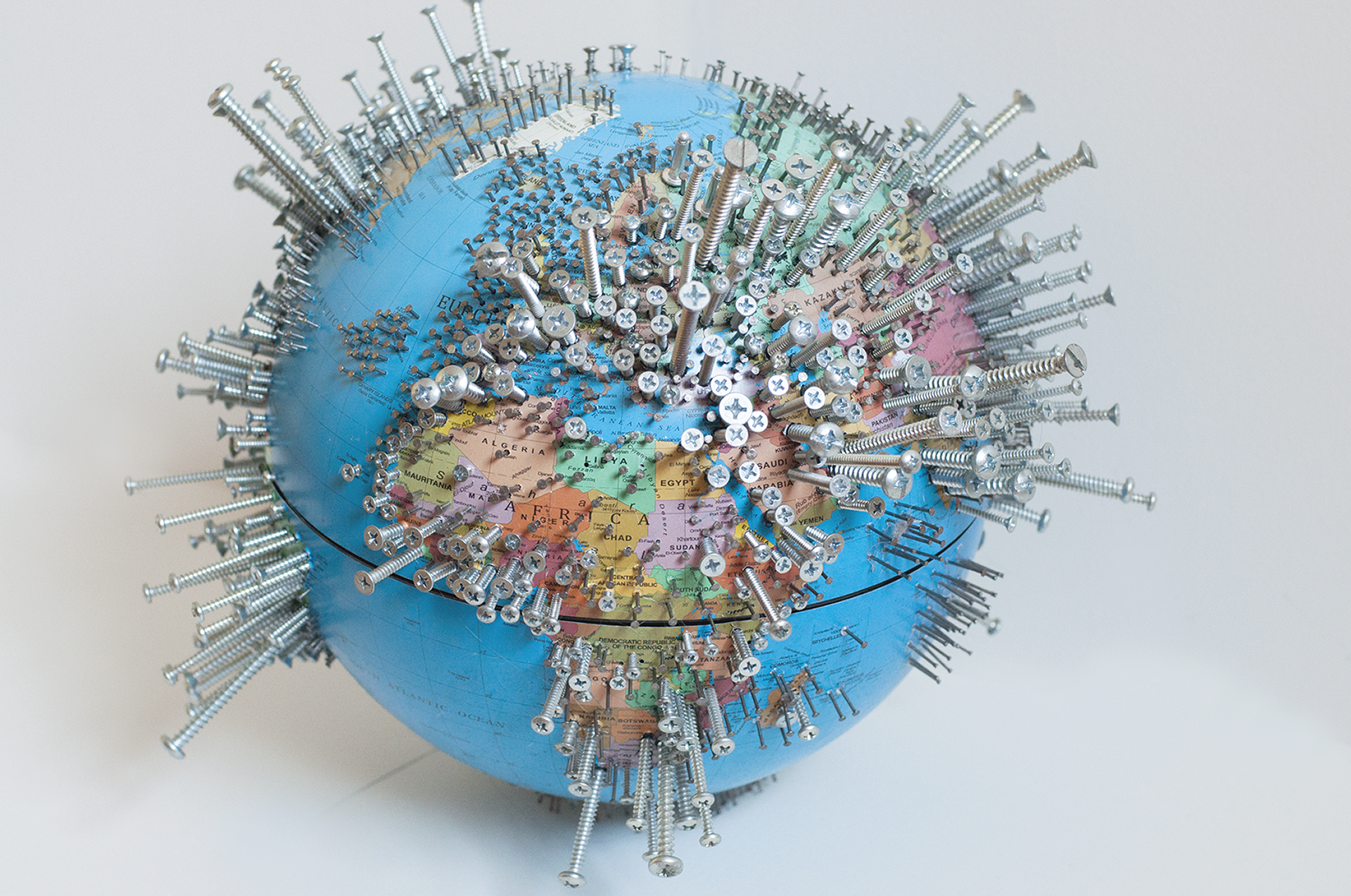

Screwed is a speculative data visualization sculpture that examines humanity's environmental impact through a temporal lens of ecological recovery. This mixed-media installation translates complex environmental datasets into a physical three-dimensional form, creating a tangible representation of the time required for different regions to return to pre-industrial ecological states following hypothetical human extinction in 2015.
The work operates within the framework of speculative design and critical data visualization, using artistic interpretation to make abstract environmental data emotionally and physically comprehensible. By materializing temporal recovery data as physical interventions on a globe, the piece transforms statistical projections into visceral, tactile experience.
The sculpture synthesizes multiple environmental impact datasets to calculate regional recovery timeframes. Each data point was translated into physical form through strategically placed screws, with screw size directly correlating to calculated recovery time. This creates a haptic data landscape where viewers can literally feel the weight of environmental damage through physical interaction with the object.
The choice of screws as the primary visual metaphor serves multiple symbolic functions: they represent industrial penetration into natural systems, the mechanical nature of human environmental intervention, and the difficulty of "unscrewing" or reversing ecological damage. The increasing screw sizes create a topographical map of human impact, transforming the familiar form of Earth into an alien, wounded object.The globe's structural failure during the creation process—cracking under the physical weight of the screws—became an unintended but poetic element of the work. This material breakdown mirrors the ecological systems depicted, where natural structures fail under excessive anthropogenic pressure.
Screwed operates as both data visualization and environmental commentary, challenging viewers to confront the long-term consequences of industrial civilization. By projecting recovery timelines into the distant future (3015), the work emphasizes the geological timescales of environmental healing versus the brief period of human industrial impact.
